Pub.lished Movie Reviews
Dogville (2003)
"Dogville" (2003) is a gripping tale of a woman on the run from the mob. She finds reluctant acceptance in a small Colorado community, in exchange for her labor. However, when a search party visits the town, she discovers that their support comes with a steep price.
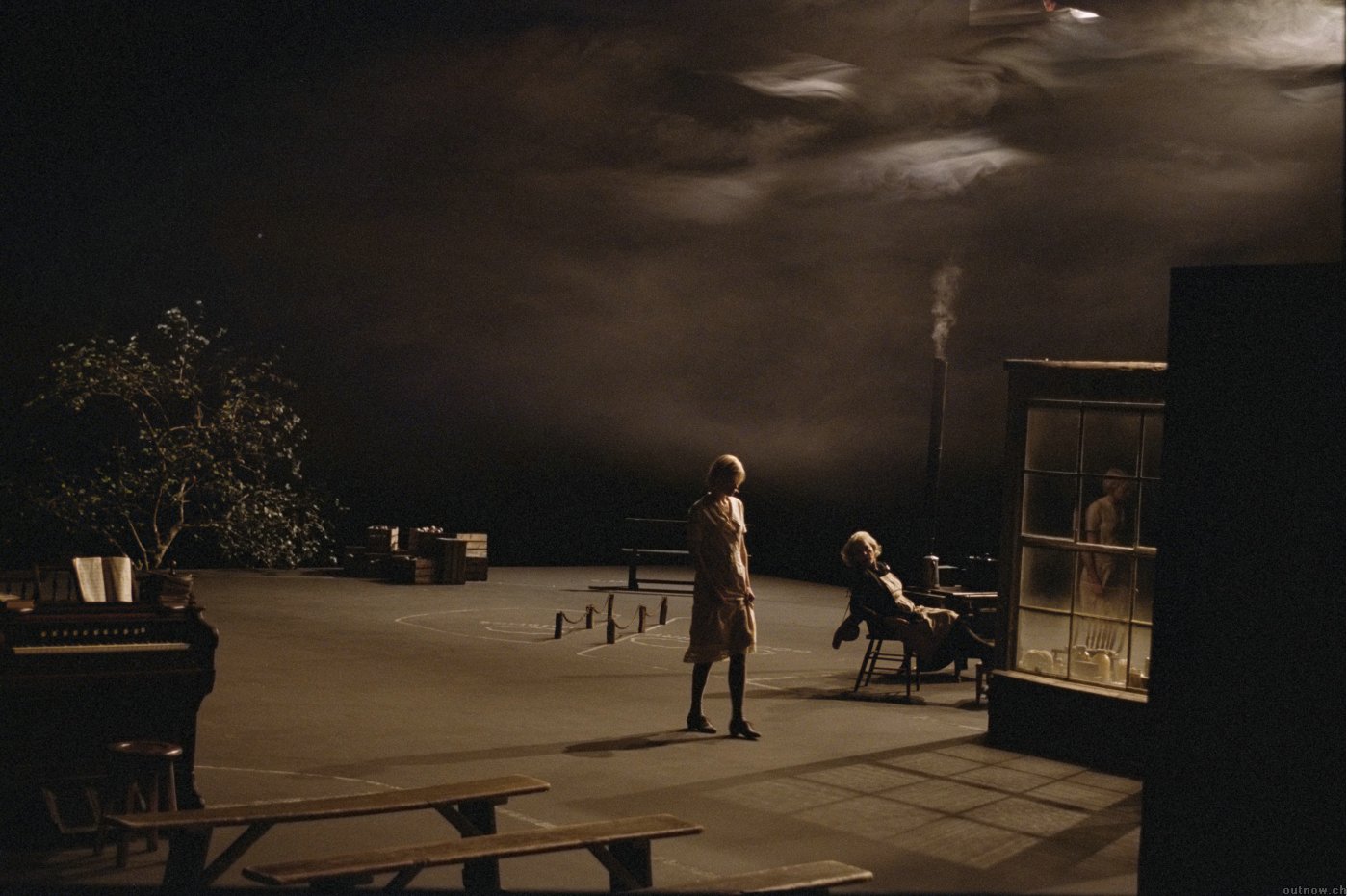
This film is like a parable, told on an extremely minimal, stage-like set. This unique approach to filmmaking, which was later mirrored by Wes Anderson in "The Grand Budapest Hotel" in 2014, adds to the intensity of the story. "Dogville," with its simple set imitating a small town, feels more like watching a play on screen than a traditional movie.
The movie's scenes are largely left bare, placing a heavy reliance on the story and the acting. This approach works to its advantage, as the heartbreaking tragedy depicted in the movie, coupled with the brilliant performance by Nicole Kidman, leaves a deep impression on the viewer.
If you're in search of a light-hearted, cheerful movie to pass the time, this isn't the right choice for you. Especially if you're not fond of cynical perspectives on humanity or society, I would recommend avoiding the works of Lars von Trier.
However, if you're looking for a movie that will stay with you long after the credits roll, "Dogville" is a must-see. It’s not an easy watch, but it's not a movie that's easily forgotten either. It's thought-provoking, and much like that catchy tune that gets stuck in your head, this movie will linger in your memory for years to come.
- You are sensitive to graphic depictions of violence and sexual assault as the film contains explicit scenes.
- You don't enjoy films that are more experimental in nature. The film stages its story in a minimalist setting using chalk marks to represent buildings.
- You have difficulty with movies that explore dark and complex themes such as power, abuse and morality.
- You prefer films with a traditional narrative structure and a clear resolution.
- You are under the age of 18. The film contains scenes and themes that are not suitable for younger audiences.
Warning: The following may contain spoilers:
What's the deal with "Dogville?"I mean, it's a town so small, you're done with the grand tour before your coffee gets cold. It's like, "Oh, look, there's the old man's house and... yep, we're back at the town square."
And the whole town is on a stage, no walls, no actual houses. It's like the director, Lars von Trier said, "You know what's overrated? Walls!" How can you have privacy in a town with no walls? "Hey, I'm going to take a shower. Don't mind the soap bubbles!"
And let's not even get started on the chalk outlines for buildings. It's like a crime scene investigator's dream. "Oh, look, there's the chalk outline of where the general store used to be. It's a real tragedy."
The whole movie feels like a game of Sims gone awry. What's next? "Oh, I think I forgot to draw a bathroom, just pretend, will ya?"
And don't get me wrong, it's a fascinating movie, but it's also three hours long. That's longer than my last relationship!
American Beauty (1999)
"Dogville" (2003) and "American Beauty" (1999) are both thought-provoking dramas that explore the darker corners of human nature and society. They share the thematic exploration of disillusionment, hypocrisy, and societal norms, offering a critique of American suburban life. Both films employ unique storytelling methods and stylistic cinematography that encourage viewers to question and reflect on the nature of humanity and the world around them. Therefore, those who appreciate the depth, complexity, and social commentary in "Dogville" will likely find similar elements to love in American Beauty.
Memento (2000)Fanciers of "Dogville" will appreciate "Memento" due to their shared themes of memory, identity, and morality. Both films challenge traditional storytelling, with Dogville's minimalist stage and Memento's reverse narrative structure. The intense performances by Nicole Kidman in "Dogville" and Guy Pearce in "Memento," along with their respective directors' (Lars von Trier and Christopher Nolan) unique cinematic styles, create emotional, psychological dramas that leave audiences questioning their own perceptions of reality.
Donnie Darko (2001)Connoisseurs of "Dogville" will appreciate "Donnie Darko" due to both films' unique storytelling style, complex characters, and exploration of philosophical themes. Like "Dogville," "Donnie Darko" also deviates from conventional narrative structures, leaning heavily into symbolism and ambiguous plotlines that encourage audience interpretation. Both films delve into the darker aspects of humanity and society, offering a thought-provoking, emotionally resonant viewing experience underscored by standout performances.
Magnolia (1999)Another film by Paul Thomas Anderson, Magnolia, is an ensemble drama that takes a deep dive into human connection and vulnerability. It's a movie that demonstrates how deeply entwined human lives can be, echoing Dogville's exploration of community dynamics.
Breaking the Waves (1996)A devastatingly poignant drama from Lars von Trier, the director of Dogville. Breaking the Waves tells a heartbreaking story of love and self-sacrifice set against a harsh and judgmental society. Its intense emotional core and excellent performances can make it a rewarding viewing experience.
2001: A Space Odyssey (1968)Admirers of "Dogville" (2003) will appreciate "2001: A Space Odyssey" (1968) for its similar narrative ambition, intellectual depth, and innovative filmmaking techniques. Both films challenge traditional storytelling norms and invite viewers to interpret their nuanced, complex plots. Just as "Dogville" uses a minimalist stage to create a powerful social commentary, "2001: A Space Odyssey" utilizes groundbreaking special effects to explore profound themes about humanity's place in the universe. The films share a penchant for philosophical introspection and thought-provoking ambiguity that will resonate with viewers who appreciate cinema that engages both the mind and the senses.
Citizen Kane (1941)Fans of "Dogville" will appreciate "Citizen Kane" for its similar narrative prowess, complex characters, and innovative cinematic techniques. Both films, despite being made in different eras, are masterpieces in exploring human nature, societal expectations, and the consequences of ambition. Like "Dogville," "Citizen Kane" takes a critical look at American society, with its titular character's rise and fall serving as a compelling allegory about power and isolation. The groundbreaking cinematography and storytelling structure of "Citizen Kane," similar to the unconventional staging in "Dogville," also contribute to its status as a must-watch for those who appreciate daring, thought-provoking cinema.
The Graduate (1967)"Dogville" (2003) and "The Graduate" (1967) are critically acclaimed films that delve into the complexities of human nature and societal norms, challenging viewers to question their own perceptions and beliefs. Dogville's exploration of morality, power dynamics, and human cruelty is mirrored in The Graduate's exploration of post-graduation disillusionment and rebellion against societal expectations. Both films are marked by their unique storytelling techniques, with Dogville's minimalist set design and The Graduate's innovative cinematography, making them a must-watch for any film enthusiast who appreciates thought-provoking narratives and unconventional filmmaking.
Taxi Driver (1976)Both "Dogville" and "Taxi Driver" are deep, introspective films that delve into the human psyche and explore themes of morality, isolation, and societal corruption. They're both directed by visionary filmmakers - Lars von Trier and Martin Scorsese, respectively - who are known for their unique, stylized storytelling and ability to evoke strong emotional responses from the audience. The character-driven narratives, the exploration of darker aspects of human nature, and the powerful performances (by Nicole Kidman in "Dogville" and Robert De Niro in Taxi Driver) create a provocative and impactful viewing experience. Fanciers of Dogville's psychological depth and social critique will appreciate the same elements in Taxi Driver.
Rushmore (1998)"Dogville" (2003) and "Rushmore" (1998) share a unique quality of storytelling, which appeals to those who appreciate non-mainstream cinema. Both films are characterized by their distinctive directorial styles, Lars von Trier and Wes Anderson respectively, and offer rich, complex narratives filled with dark humor, quirky characters, and thought-provoking themes. While "Dogville" is a grim social critique and "Rushmore" is an offbeat coming-of-age story, both films challenge conventional filmmaking and storytelling norms, making them a delight for cinephiles who love unconventional cinema.
Dancer in the Dark (2000)"Dogville" (2003) and "Dancer in the Dark" (2000) are directed by Lars von Trier, who is known for his distinctive and innovative filmmaking style. These films share a unique visual style, intense emotional depth, and thought-provoking narratives that challenge traditional storytelling norms. The central characters in both films, portrayed brilliantly by Nicole Kidman and Björk respectively, face harrowing circumstances and moral dilemmas that elicit deep empathy from the audience. If you appreciate the raw and provocative approach of "Dogville," you will definitely love the similar themes and powerful execution in Dancer in the Dark.
The Station Agent (2003)"Dogville" (2003) and "The Station Agent" (2003) will appeal to the same audience due to their shared focus on character development, introspection, and emotional depth. Both films are character-driven, utilizing a small cast of complex individuals to explore themes of isolation, community, and the human spirit. They also share a minimalist approach to storytelling - "Dogville" with its unique stage-like set design and "The Station Agent" with its quiet, small-town setting - which allows for a concentrated focus on narrative substance over spectacle. Aficionados of directorial ingenuity and emotional profundity will likely appreciate both films.
Barton Fink (1991):If you're a fan of Dogville's exploration of complex themes, then you'll likely appreciate Barton Fink by the Coen Brothers too. It's a film that wrestles with writers' block, Hollywood, and much more, presenting a deep dive into the psyche of its titular character with an equally dark cinema.
The Passion of Joan of Arc (1928):This is a classic that anyone interested in film should see, but it may particularly appeal to fans of Dogville due to its character's inner struggle and ultimate sacrifice. It's a silent film, but you'll be amazed at how much emotion is conveyed without a single spoken word.
Lars and the Real Girl (2007):Despite its comedic premise, Lars and the Real Girl explores a multitude of human emotions, much like Dogville. The movie about a socially awkward young man who begins a romantic relationship with a life-size doll, while it seems comedic, it actually portrays a poignant exploration of loneliness and acceptance.
Like this? Then click here to see more drama movies