Pub.lished Movie Reviews
Blade Runner (1982)
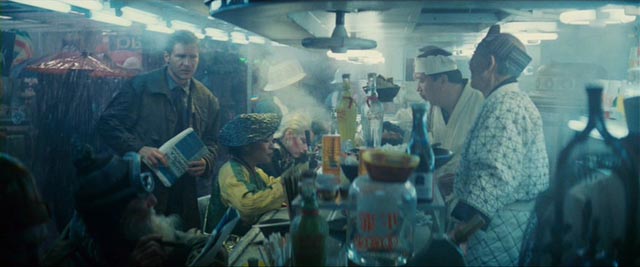
"Blade Runner," a 1982 classic, centers around a blade runner tasked with the pursuit and termination of four replicants who have stolen a space ship and returned to Earth in a quest to find their creator. The noir aesthetic of the film paints a dark, cold, and somewhat grim picture of the future. The setting, a future Los Angeles, is perpetually shrouded in darkness, an airborne filth filling its skies. It is a place where it rains often and the infrastructure is but a reflection of the present, only older, more crowded and adorned with vast floating zeppelins, individual flying cars, and colossal buildings.
The film brings to surface our fears of being outnumbered, losing our community, and our ability to communicate. It skillfully takes us into the heart of these emotions by showcasing a future where Deckard, our protagonist, exists in a world devoid of personal connections, or where they exist, they are merely synthetic, inauthentic versions of the real thing. This is a world that is indifferent to us. As the audience, we are outsiders in a strange, crowded landscape that no longer caters to us. We are left behind.
Based on Phillip K Dick's 'Do Androids Dream of Electric Sheep', the original narrative depicted a post-World War city that served as a refuge for humanity in a land decimated by radioactive dust. However, the film reimagine this future as one plagued with overpopulation, with the cityscape transformed into an impersonal megalopolis devoid of family, government or entertainment. Deckard, once perhaps connected to a home, now lives in exile, damaged.
The world Deckard now inhabits is overrun by a Chinese influx, a world where the streets are filled with foreign voices, Asian faces, and unreadable street signage. This serves to exploit a racist undercurrent of alienation and the audience's recoil from the 'Other'.
"Blade Runner" stands out because of its authenticity in portraying a future that is dirty and unpleasant. It paints an authentic future as one that is poorly lit, crowded, dirty, and full of debris. It's akin to the realness of Star Wars, where the Jawas take the wandering pair of robots and toss them into a room filled with dirty, broken robot parts. This feels real. It's haphazard, not staged, not heroic, and not well-lit.
This is the tone director Ridley Scott aimed for, a world that has a story or life of its own, not one staged for the camera. The film is filled with unrelated people and events nearby, such as the bicycle riders or the Hare Krishnas. The film doesn't filter out the grime and distraction, making it feel multi-faceted and real.
The film's technology is phenomenal, especially considering it was made before the advent of perfected CGI. Today, special effects are so flawlessly executed that they no longer command much attention. However, the lack of sophistication in Blade Runner's technology makes it seem more organic and substantial.
The Director's Cut version of "Blade Runner" did away with the original voice-over, leaving a film shrouded in mystery which demanded careful attention from the audience to fully comprehend. While the original version was straightforward and hence a box-office failure, the 1990 director's cut was less accessible, leading to its recognition as a significant piece of cinematic art.
- You have trouble with slow-paced narratives
- You are not a fan of science fiction or noir genre
- You are not comfortable with violence and graphic content
- You need a clearly defined line between heroes and villains
- You are under the age of 15, as this movie is rated R due to its themes and violence
Her (2013)
'Her' is a science fiction romantic drama directed by Spike Jonze that explores human interaction with artificial intelligence in a unique and emotional manner. Its exploration of AI and its impact on human relationships might be of interest to you if you liked 'Blade Runner'.
Minority Report (2002)If you enjoyed the noir atmosphere and thought-provoking themes of 'Blade Runner', you'll likely find similar enjoyment in 'Minority Report'. Directed by Steven Spielberg and based on a short story by Philip K. Dick (who also authored the novel that inspired 'Blade Runner'), the film combines a gritty detective narrative with complex themes of predetermination and free will, all set within a stunningly realized futurist society.
2001: A Space Odyssey (1968)Those who love "Blade Runner" (1982) will also love "2001: A Space Odyssey" (1968) because both films explore profound philosophical and existential themes through the lens of science fiction. Both movies are masterpieces of cinematography, with meticulous attention to detail and visually stunning scenes. They are introspective, slow-paced, and thought-provoking, encouraging the audience to ponder humanity's place in the universe. Moreover, they both delve into the implications of artificial intelligence and its potential impact on human society, making them timeless classics for sci-fi enthusiasts.
Rashomon (1950)"Blade Runner" and "Rashomon" are pioneering films in their respective genres that delve deeply into the nature of humanity and perception of reality. "Blade Runner," a neo-noir sci-fi film, explores the blurred lines between humans and replicants, leading to profound questions about identity and existence. "Rashomon," a Japanese period drama, presents multiple perspectives of the same incident, questioning the subjectivity of truth and the reliability of memory. Their complex narratives, rich philosophical themes, and striking visual aesthetics will appeal to those who appreciate thought-provoking cinema.
Touch of Evil (1958)Lovers of "Blade Runner" (1982) will certainly enjoy "Touch of Evil" (1958) as both films masterfully explore the theme of moral ambiguity, blurring the line between heroes and villains. They both employ a unique style of cinematography, creating a dark, atmospheric setting that enhances the storyline. Both "Blade Runner" and "Touch of Evil" are known for their iconic opening sequences and their exploration of complex characters, making the latter a must-watch for fans of the former who appreciate nuanced storytelling and visually stunning film noir aesthetics.
Taxi Driver (1976)Those who love "Blade Runner" (1982) will also love "Taxi Driver" (1976) because both films delve deeply into themes of existentialism, loneliness, and alienation within a sprawling, dystopian cityscape. Both movies offer a profound exploration of the human condition through the eyes of complex and flawed protagonists. Their narratives are driven by atmospheric, visually compelling cinematography and innovative storytelling. The slow-burn tension and morally ambiguous characters in "Taxi Driver" mirror the brooding neo-noir quality of "Blade Runner," making it an equally compelling experience for fans of the latter.
The Fog of War (2003)Buffs of "Blade Runner" (1982) may appreciate "The Fog of War" (2003) for its exploration of complex themes, much like the sci-fi classic. Although one is a documentary and the other a futuristic dystopian film, both delve into the human condition, morality, and the consequences of our actions. Blade Runner's exploration of artificial intelligence, humanity and ethics finds a parallel in The Fog of War's examination of political decisions, warfare and its profound impact on humanity. Both films encourage deep thinking and offer compelling narratives that leave a lasting impression.
Ex Machina (2014):A slick blend of science fiction and suspense, 'Ex Machina' explores themes similar to 'Blade Runner'', such as artificial intelligence and what it means to be human. Writer-director Alex Garland crafts a tense and thought-provoking tale that's as visually arresting as it is intellectually stimulating.
A.I. Artificial Intelligence (2001):A collaboration between Stanley Kubrick and Steven Spielberg, 'A.I. Artificial Intelligence' is another science fiction film that grapples with the moral and emotional implications of artificial intelligence. The film's poignant exploration of humanity and identity, along with its visually striking depiction of the future, should appeal to fans of 'Blade Runner'.
Ghost in the Shell (1995):This Japanese anime classic is a must-watch for 'Blade Runner' fans. Much like 'Blade Runner', 'Ghost in the Shell' is an atmospheric, futuristic noir that explores deep philosophical themes around identity and technology. The beautiful animation and cyberpunk setting is sure to resonate with fans of Ridley Scott's masterpiece.
Like this? Then click here to see more scifi movies