Pub.lished Movie Reviews
Sleeper (1973)
"You laugh all the way through and come out smiling and happy, but you're not driven crazy--not really turned on the way his messier movies can turn you on." - Pauline Kael
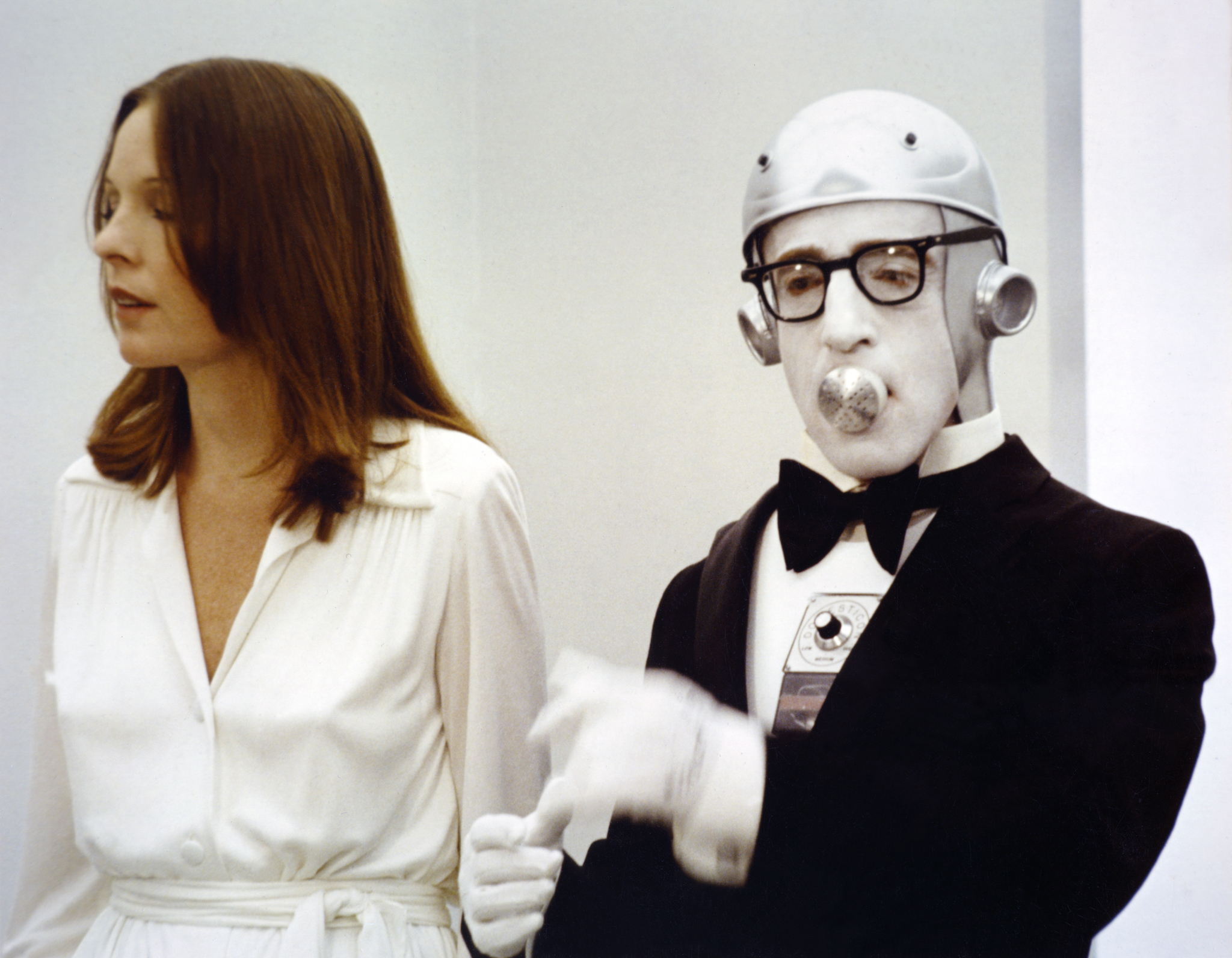
"Sleeper," the 1973 film, operates as a science fiction parody, offering a farcically grim view of a dystopian future. Woody Allen's comedic genius shines through, filling the narrative with physical comedy, slapstick, and one-liners that keep the audience in stitches.
This film's physical comedy pays homage to the masters like Buster Keaton and Charlie Chaplin. The elaborate chases, pratfalls, and near-misses are so well choreographed and executed that they often seem more like ballet than comedy. The humor flows naturally from the story's absurd situations, just as it did in Keaton's and Chaplin's films.
"Sleeper" also pays tribute to the slapstick comedy of Laurel and Hardy. Allen and his co-stars get themselves into a series of ridiculous predicaments that only become more convoluted and hilarious as they try to extricate themselves.
Of course, a Woody Allen film wouldn't be complete without his signature one-liners, and "Sleeper" is no exception. Allen's character, a health food store owner cryogenically frozen and awakened 200 years in the future, is a constant source of witty remarks and clever asides.
"Sleeper" is not a serious science fiction film by any stretch of the imagination. It doesn't ponder the nature of humanity or the universe, nor does it endeavor to predict the technological advances of the future. Instead, it uses the conventions of the genre as a backdrop for its comedic sketches. But within its genre, it is a brilliantly funny science fiction film. This is a movie that understands the essence of comedy, and in doing so, it serves as a reminder of what makes us laugh and why.
- You are under the recommended age of 18.
- You dislike sci-fi movies.
- Your comic taste doesn't lean towards satire and slapstick humor.
- You don't enjoy old films.
- You are not a fan of Woody Allen's storytelling.
Warning: The following may contain spoilers:
What's the deal with "Sleeper" (1973)? I mean, here's a guy, Woody Allen, wakes up 200 years in the future and he's still neurotic! You'd think after a couple of centuries of beauty sleep, he'd be a little more relaxed, maybe do some yoga, meditate a bit. But no, he still can't decide where to eat!
And what about those futuristic clothes? It's like everyone's walking around in a tin-foil fashion show. I mean, who looked at a baked potato and thought, "Yep, that's the look for the future."
The Graduate (1967)
"Sleeper" (1973) and "The Graduate" (1967) are classic films that explore themes of personal evolution and societal expectations through a comedic lens. They’re anchored by the performances of their charismatic and relatable leads, Woody Allen and Dustin Hoffman respectively. Both films are known for their sharp, witty dialogues and unexpected plot twists that keep the audience engaged. Additionally, these films have been praised for their satirical take on societal norms and expectations, making them appealing to viewers who enjoy thoughtful, yet humorous storytelling.
Monty Python and the Holy Grail (1975)Fans of "Sleeper" (1973) will find the same satirical humor, slapstick comedy, and anarchic absurdity in "Monty Python and the Holy Grail" (1975). Both films challenge established societal norms and institutions with sharp wit and irreverence, featuring iconic performances from their respective comedic casts. While "Sleeper" takes on a dystopian future, "Monty Python" parodies the legend of King Arthur, but both deliver hilarious social satire wrapped in fanciful storylines, making them a perfect pairing for those who appreciate intelligent, offbeat humor.
Manhattan (1979)"Sleeper" (1973) and "Manhattan" (1979) are directed by Woody Allen, bringing his signature style of humor, wit, and neurotic characters to both films. "Sleeper" fans will appreciate Allen's portrayal of "Manhattan" as another comically absurd landscape, filled with intellectual banter, romantic entanglements, and philosophical musings. The films share similar themes of love, identity, and the human condition, all set against the backdrop of Allen's humorous, absurdist viewpoint. Furthermore, the black-and-white cinematography of "Manhattan" mirrors the visual style of "Sleeper," contributing to a consistent aesthetic experience.
This Is Spinal Tap (1984)Connoisseurs of "Sleeper" (1973) will also love "This Is Spinal Tap" (1984) because both films are iconic examples of satirical comedy that rely heavily on slapstick humor and witty dialogue. "Sleeper," directed by Woody Allen, and "This Is Spinal Tap," directed by Rob Reiner, both utilize absurdity and exaggeration to parody their respective genres - science fiction dystopia and rock music documentaries. Both films are characterized by their offbeat humor, memorable one-liners, and the brilliant comedic performances of their cast. Therefore, those who appreciate the comedic style and satirical narrative of "Sleeper" will likely enjoy the similar approach in This Is Spinal Tap.
Raising Arizona (1987)Admirers of "Sleeper" will appreciate "Raising Arizona" as both films share a similar absurdist, slapstick style of humor. They utilize exaggerated characters and surreal situations to create comedic effects. Woody Allen's performance in "Sleeper" as a neurotic character waking up in a dystopian future is analogous to Nicolas Cage's wacky portrayal of an inept criminal in "Raising Arizona." Both films are also directed by iconic filmmakers (Woody Allen and the Coen Brothers) known for their unique, quirky storytelling styles. The satirical and often ridiculous plotlines of both films offer an entertaining escape from reality.
Best in Show (2000)Fans of "Sleeper" (1973) will also love "Best in Show" (2000) as both films share a similar style of humor, characterized by witty dialogue, comedic timing, and absurd situations. Both films are satirical in nature, with "Sleeper" mocking the future and science-fiction tropes, while "Best in Show" makes fun of dog shows and their participants. The humor in both movies relies heavily on character-driven comedy, along with physical humor and slapstick. Furthermore, the two films are products of influential comedic minds, Woody Allen and Christopher Guest respectively, known for their unique and unconventional approach to comedy.
Play It Again, Sam (1972):If you enjoyed "Sleeper," you'll likely also appreciate "Play It Again, Sam." Just like "Sleeper," it's a Woody Allen film, so it carries his unique comedic style. Here, he plays a film critic trying to get over his divorce by dating again, but in the most comically awkward ways imaginable. Plus, it delves into a few classic movies, so it offers a different side of Allen's writing.
Everything You Always Wanted to Know About Sex * But Were Afraid to Ask (1972):Another one of Woody Allen’s early 1970s ensemble casts and episodic storytelling, this time with a humorous and oftentimes absurd overview of various aspects of sex. Like "Sleeper," it's zany and full of non-stop wit and one-liners.
Bananas (1971):"Bananas" is an earlier Woody Allen film that's a must-watch if you enjoyed "Sleeper." The humor in this film is absurd, with Allen at the helm as a products tester who finds himself unintentionally leading a revolution in a small Latin American country. The humor is rapid-fire and often surreal, much like that of "Sleeper."
Young Frankenstein (1974):Directed by Mel Brooks, who is known for his satirical and spoof-style humor, "Young Frankenstein" is a clever and hilarious homage to the classic Frankenstein movies of the '30s. If you enjoyed the slapstick elements and goofy humor in "Sleeper," this is a great movie to check out.
The Life Aquatic with Steve Zissou (2004):If you liked the quirky humor and stylized aesthetic of "Sleeper," you may also enjoy Wes Anderson's films. "The Life Aquatic with Steve Zissou" is a good place to start, as it offers a unique blend of absurd comedy, character-driven drama, and striking visual flair. Plus, Bill Murray gives a stellar performance as the eponymous Steve Zissou.
Like this? Then click here to see more scifi movies